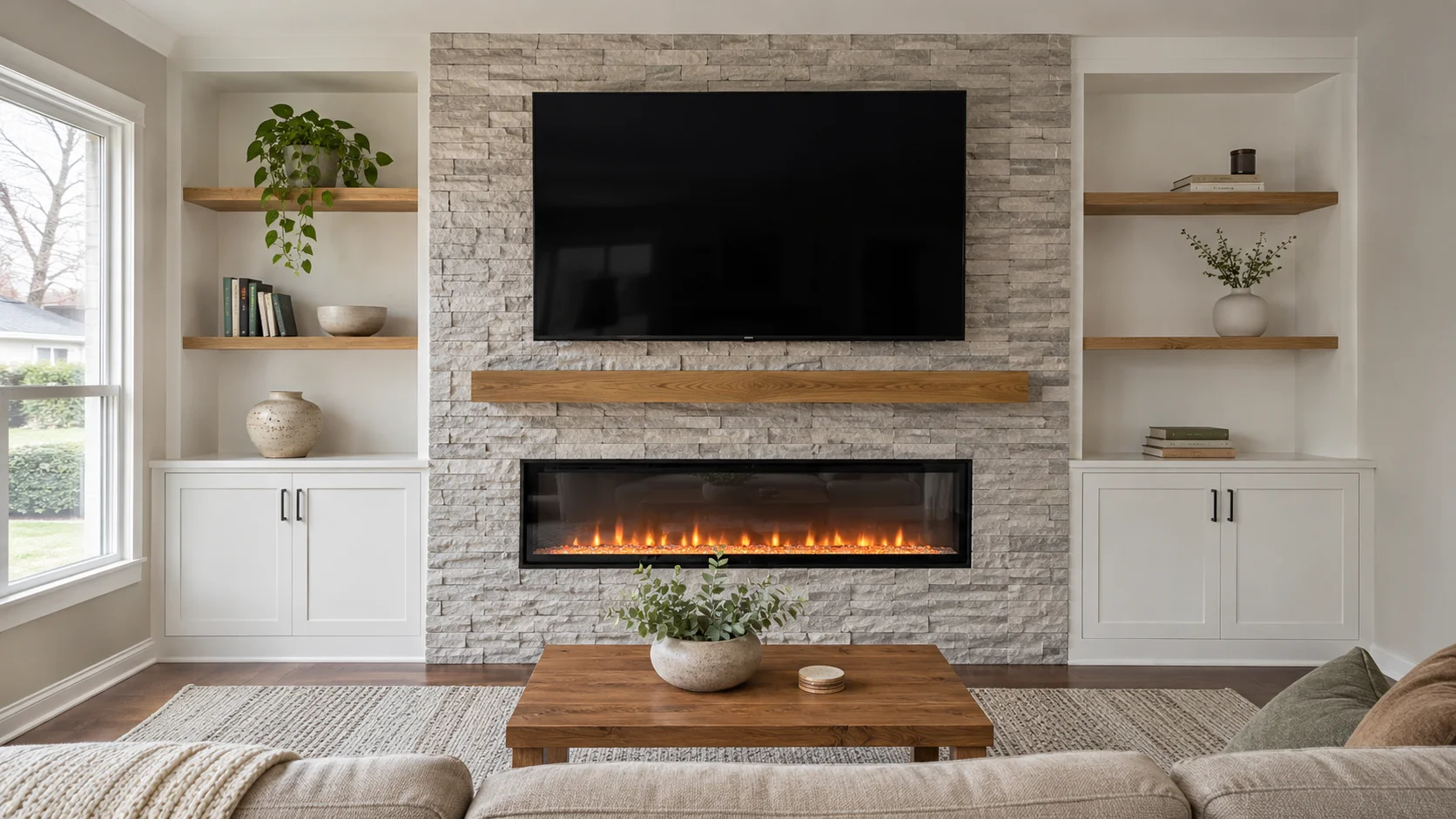
A wall with a TV and an electric fireplace is a project we often plan for Chicagoland living rooms. It gives the room a warm center in winter and a dedicated place for the TV all year. Bringing both together also means planning for heat, electrical connections, cable routing, and comfortable viewing before construction begins.
This guide walks through those decisions in the order we discuss them with homeowners.
Will you watch TV while the fireplace is heating the room, or will you mainly use the flame effect for its appearance?
01 / Can a TV Go Above an Electric Fireplace?
In many cases, yes. Electric fireplaces produce heat differently from wood-burning or gas fireplaces, and many models let you use the flame effect with the heater turned off. This makes a TV above an electric fireplace a practical option when the layout follows the manufacturer's installation requirements.
Heat still needs careful planning. Some units release warm air through the front, while others direct it upward. The installation manual lists the required clearances, so check those measurements before deciding where to mount the TV.
A mantel or shelf can create a visual break between the fireplace and screen, and depending on its design, it may also help redirect warm air. It should never be treated as a substitute for the required clearances or the TV manufacturer's temperature limits.
If your home has an existing wood-burning fireplace, an electric insert may fit inside the old firebox. This can be a practical way to keep an original brick or stone surround in an older North Shore home. Check the opening size and the electrical supply before choosing one.
02 / How High Should the TV Be?
TV height is one of the harder decisions to change after the wall is finished. A common guideline is to position the center of the screen near seated eye level, roughly 40 to 45 inches from the floor for a typical sofa. An electric fireplace below the TV usually pushes the screen higher, so the goal is to limit that height increase while keeping safe clearances.
A few layout choices can help. Choose a slim linear fireplace that can be installed low on the wall, and avoid an unnecessarily tall mantel. Keep the clearance the manual requires and check the final TV position before framing begins.
If the screen still sits above eye level, a tilting mount can improve the viewing angle. A pull-down mount is another option, since it lets you lower the TV while you watch.
Viewing distance matters too. Measure from your main seating position to the wall and consider how high you will need to look to see the screen comfortably. You can also mark the proposed TV position on the wall and test it from your sofa before committing to the layout.
03 / Which Electric Fireplace Fits the Wall?
For an electric fireplace wall, three installation styles are worth considering. Your choice affects the framing, the finished appearance, and the electrical planning.
Recessed linear fireplace
A recessed linear fireplace sits inside a framed opening, with the front of the unit nearly flush with the finished wall. It creates a built-in appearance and is a common choice for a media wall with fireplace.
Depending on the model and the existing wall depth, installation may require a framed bump-out. This is a shallow extension built in front of the original wall to create enough space for the fireplace. Many of our custom fireplace walls use recessed units.
Electric fireplace insert
An insert fits into an existing fireplace opening. It works well when you want to keep the original fireplace surround while switching to an electric unit. Measure the opening first to confirm the insert fits.
Wall-mounted electric fireplace
A wall-mounted unit attaches directly to the wall surface. It needs less framing than a recessed model, although the unit stays more visible. This can be a practical option when you want to avoid building a deeper feature wall.
The fireplace width also affects the overall layout. A unit that is close to the TV's width, or slightly wider, often creates balanced proportions. A narrow fireplace beneath a much larger screen can look undersized.
The surrounding materials help define the room's style. Stone or brick creates a more traditional appearance, while wood panels or a smooth painted finish give the wall a more contemporary feel.
04 / How to Plan Power and Hide Cables
Both the fireplace and TV need power, and the TV may also need connections for streaming devices, speakers, or a game console. Planning these connections before construction keeps visible cords off the finished wall.
Some electric fireplaces plug into a standard outlet, while others need a hardwired connection or a dedicated circuit. A licensed electrician can review the fireplace's electrical requirements, install any needed wiring, and confirm that the circuit can handle the load.
For the TV, a recessed outlet behind the screen keeps the power connection hidden. HDMI and other low-voltage cables can run through conduit, using cables rated for in-wall installation. Never run an ordinary TV power cord or extension cord through the wall. A listed in-wall power kit or an outlet installed by an electrician is the safe solution.
Think about where your other equipment will go. A soundbar, streaming box, or game console needs power, ventilation, and easy access. Cabinets or built-in shelving beside the fireplace keep it organized and within reach. A removable panel for the fireplace and cables also helps avoid wall repairs when something needs servicing or an upgrade later.
05 / What Shapes the Cost of a Fireplace and TV Wall?
The cost of an electric fireplace wall depends on the wall size, finish materials, fireplace model, framing, and electrical work. Additional features such as cabinets, shelving, or accent lighting also add to the scope.
A written quote should explain what is included, from framing and surface finishes to fireplace installation and electrical connections. This makes it easier to compare options and understand which parts of the work are covered.
A few details make the first conversation more productive:
- A straight-on photo of the wall and another taken from your main seating position
- The approximate wall width and ceiling height
- Your TV size and any devices you plan to connect
- The location of existing electrical outlets
- Two or three examples of fireplace wall designs you like
You can see how these details came together in our stone fireplace and TV wall in Lake Forest, or explore more options for media and TV walls.
A fireplace and TV wall works well when every element has a planned place: the screen at a comfortable viewing height, heat directed safely away from it, and every cable concealed behind the finished wall.