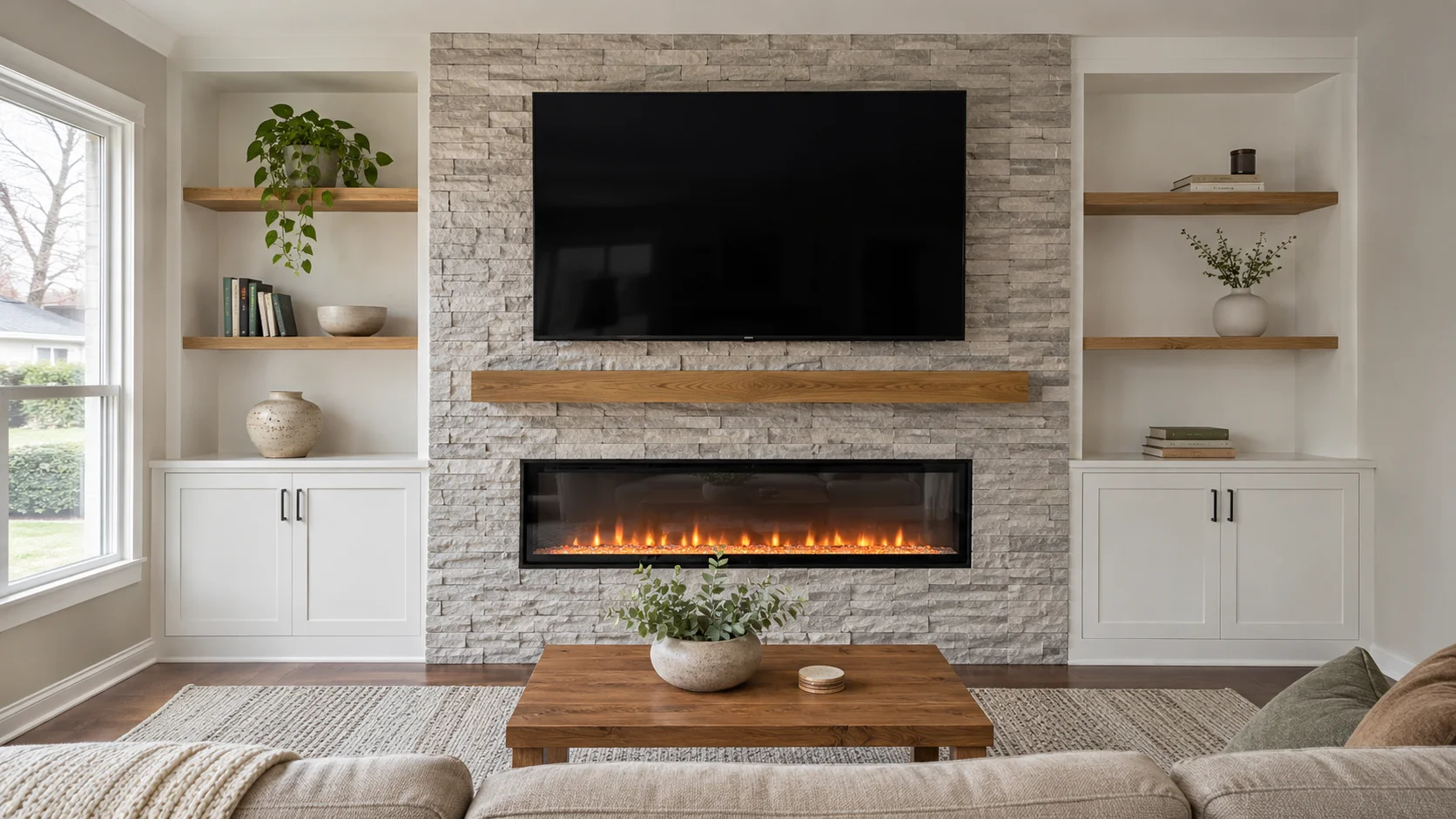
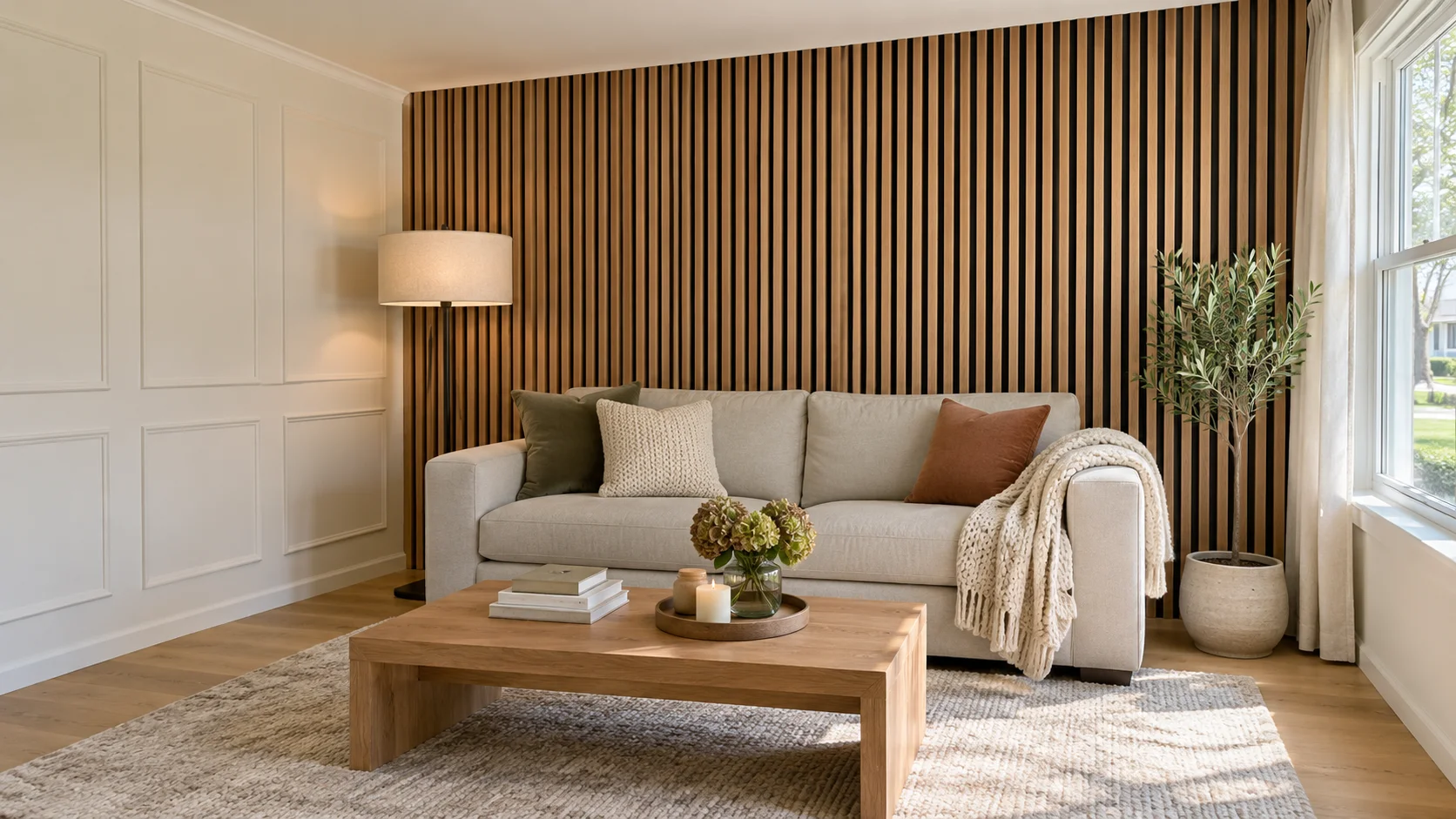
Wood slats, shiplap, and panel molding can all turn a plain wall into a wood accent wall, yet each one changes a room in its own way. Slats add depth and rhythm, shiplap adds clean, continuous lines, and molding adds a tailored, classic look. The right choice depends on your home's style, the room, and how much texture you want to live with every day.
Below, we look at each finish on its own, then match them to the rooms where Chicagoland homeowners often request them. We also cover what to consider before choosing a layout.
Look at the trim, doors, and windows already in the room. Pick the finish that repeats their style, and the new wall will look like part of the house.
01 / What Do Wood Slats Bring to a Room?
Wood slatted walls use narrow wood strips, typically installed vertically with consistent spacing between them. Some slat panels come with a dark acoustic felt backing, which creates shadow lines and helps reduce echo.
Where It Works
Slats suit modern and mid-century interiors. They work well behind a bed, around a TV, or on a long living room wall, where the vertical lines make the ceiling feel a little higher.
What to Keep in Mind
The gaps collect dust, so plan on an occasional pass with a vacuum brush. Plan the slat layout around outlets and switches so the openings have clean edges and the devices stay accessible. Natural oak or walnut adds warmth, while slats painted in the wall color create a quieter texture. See finished examples of our wood slat accent walls.
02 / Where Do Shiplap Walls Work?
Shiplap uses boards with overlapping edges that leave an even gap between them. It is often installed horizontally and painted, giving the wall a simple pattern that is easy to see from across the room.
Where It Works
Shiplap walls fit farmhouse, coastal, and transitional homes. They are a common choice for living rooms, kitchens, entryways, and the wall behind a bed. Installed vertically, the boards create a more contemporary look and draw the eye up.
What to Keep in Mind
Horizontal lines can make a narrow room feel wider, but they also draw attention to uneven walls or ceilings, so the installation needs careful measuring and leveling. Painted shiplap is easy to refresh with a new color later. In bathrooms and mudrooms, choose materials suited to moisture and a washable paint finish. Learn more about our shiplap accent walls.
03 / When Does Panel Molding Fit?
Panel molding uses narrow trim pieces applied to a flat wall to create decorative rectangles or squares. Wainscoting is a related treatment that adds panels, boards, or decorative trim to the lower part of a wall, and a chair rail often finishes the top edge. Both can be painted to match the wall or finished in a contrasting color.
Where It Works
Wall wainscoting and molding suit traditional and transitional homes, adding structure to dining rooms, entryways, stairways, and hallways. A wall panel accent behind a bed or sofa can also bring a calm, tailored look to a modern room when the pattern is kept simple.
What to Keep in Mind
Good proportions make a noticeable difference. Panel sizes should relate to the wall height, windows, and doors, so we plan the layout before cutting any trim. Panel molding projects only slightly from the wall, which makes it a practical option for smaller rooms and walls with furniture in front of them. Explore our wall panels and wainscoting.
04 / Which Finish Suits Each Room?
When homeowners are torn between options, the room itself often settles the decision. Here is how we usually match the three finishes:
- Bedroom: wood slats or a panel grid behind the bed add texture without crowding the space.
- Living room: slats around a TV or shiplap on a long wall give the room one clear feature wall.
- Dining room: panel molding or wainscoting adds a classic backdrop for the table and lighting.
- Entryway and stairway: durable wainscoting protects the lower wall from everyday scuffs.
- Home office: acoustic slat panels soften echo and create a clean backdrop for video calls.
- Kitchen or mudroom: shiplap with a washable paint finish is easy to wipe down and can be repainted later.
You can also combine finishes. Wainscoting along a stairway and shiplap on a landing wall can work together when they share the same paint color and trim style. To see a finished slat wall in a real home, look at our wood slat bedroom wall in Highland Park.
05 / How Does Your Choice Change the Project?
Each finish calls for a different installation approach. Wood slats need consistent spacing and careful planning around outlets and switches. Shiplap requires straight starting lines and accurate cuts so the boards fit neatly around doors, windows, and corners. Panel molding takes detailed measuring to keep the pattern balanced across the wall.
The condition of the existing wall also matters. Uneven surfaces may need preparation before installation, and walls with several openings take more careful layout. The wall size and height, the wood species or paint finish, and the number of cutouts all affect the cost.
To help us plan your project, send a straight-on photo of the wall, its approximate width and height, and a few pictures of finishes you like. If you are still deciding, our accent walls page shows more options.
The right wall finish matches your home's style, suits how the room is used, and still feels right to you years from now.